


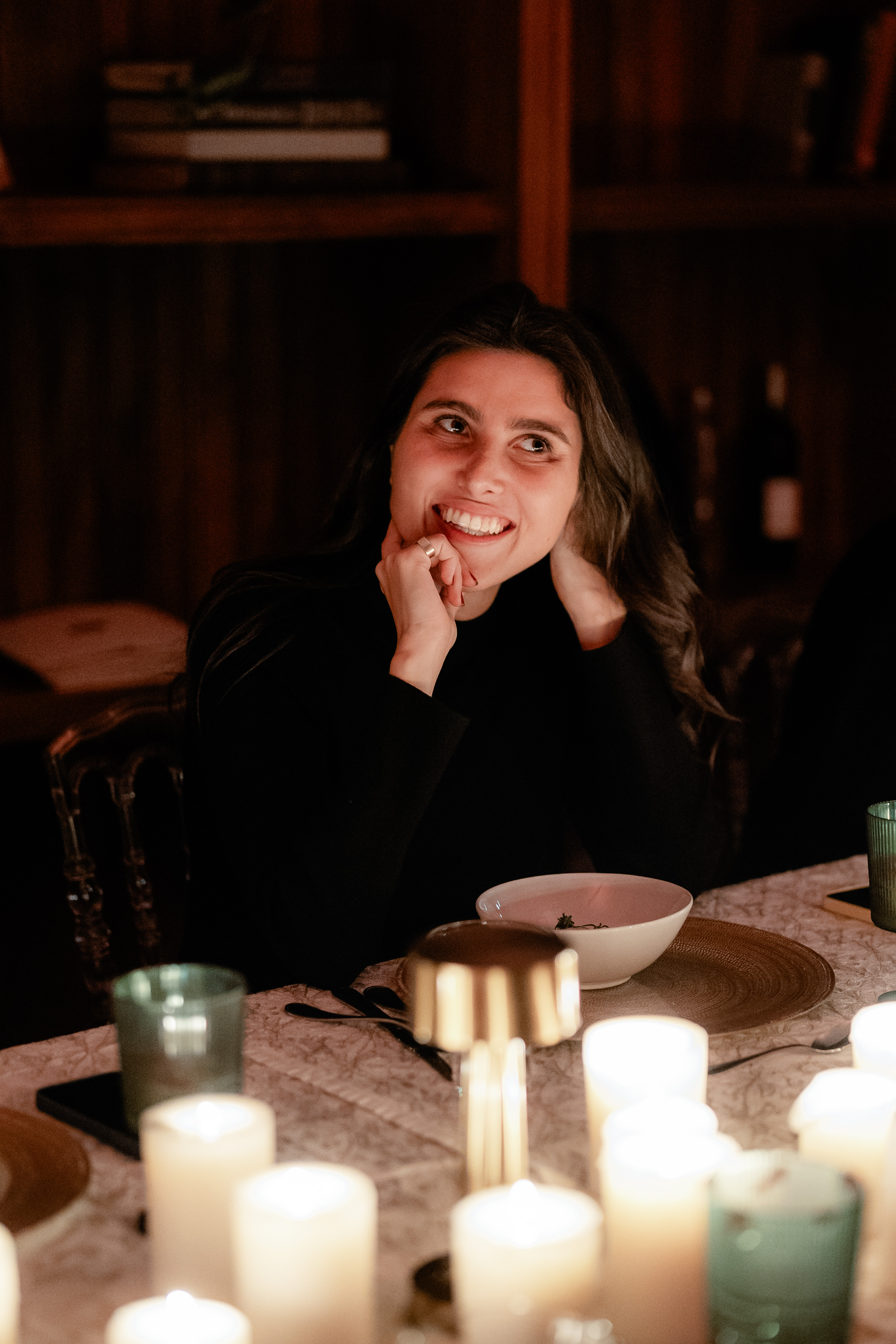
Malak Yacout is a writer, curator, and founder covering hospitality, food, heritage, and destination development. As the founder of ALMA, she collaborates with chefs and cultural partners to celebrate heritage through dining experiences and cultural program.
Could you please tell our community a bit about yourself and what you do?
Hi, World of Mouth community! I'm Malak Yacout ملك ياقوت , born in Alexandria, Egypt, and raised in Beirut. I serve the worlds of hospitality and social entrepreneurship as a founder, investor, board member and currently Chief Community Builder & Creative Director of ALMA Heritage Hospitality.
By accident or by chance, I traveled the world at a very young age, which gave direction to my already-there love for food and culture, and developed into a strong hospitality point of view. Food became my love language, and hospitality the lens through which I celebrate, grieve, travel, meet friends, reconnect with family, and make sense of the world.
In 2019, I started curating surprise culinary adventures across Lebanon for friends. They never knew where we were going, only that they trusted me enough to come along. That trust became a roaming secret supper club, and eventually matured into ALMA, where confirmed guests still don't discover the location until 48 hours before supper. We build community around heritage, curating immersive experiences where the chef's menu becomes an expression of the place itself. Sometimes, that means a nonna's home cooking in the middle of a field. Other times, we are talking about a ten- course menu by an emerging chef in an ancient Egyptian museum.
ALMA is the fullest expression of what I believe: that emerging chefs deserve a stage to discover their own culinary voice, and that overlooked places and heritage deserve the same chance: to be rediscovered, celebrated and sustained through regenerative hospitality, storytelling and meaningful partnerships.
For more of the journey and behind the scenes, you can find me on Instagram, @curatedbymalak.
What are you currently working on or excited about?
No two days at ALMA look the same. One day, I'm hosting guests. The next, I'm scouting neighbourhoods with anthropologists, learning from heritage-conservation experts, testing, iterating and rehearsing with chefs, or working alongside brands that care more about building community than simply hosting another event. What excites me most is the common thread that runs through every experience. No matter how different the chef, cuisine or setting, every experience feels unmistakably ALMA. For me, that means giving our guests access to places, heritage and stories they simply couldn't experience any other way, while making them feel they've somehow come home.
Right now, two flagship projects have my full heart, both unfolding in places across Egypt that deserve far more attention than they receive. When a guest leaves with a new favourite place, and the first thing they think of is who they'll bring back next time, that's the greatest compliment there is.
How would you describe the restaurant scene in your hometown at the moment?
I move between Lebanon and Egypt and I feel blessed to call both Beirut and Cairo home, so let me give you both.
Beirut has always been a point of contact with the world: a trading port, a capital that keeps reinventing itself. Its restaurant scene does the same. New concepts keep arriving, bringing fresh ideas and different cuisines, yet somehow they never replace the places we grew up with. Restaurants like Mounir and Mhanna are woven into our lives. They've hosted birthdays, Sunday lunches, celebrations after graduations, weddings, and countless family gatherings. Every time I go back, I feel the same warmth, and see the same familiar tables filled with three generations at once. Simply timeless.
Like Lebanon itself, Beirut is a city of contrasts. A week in Beirut starts around fresh produce, vibrant salads and nourishing bowls. Lebanese people care deeply about health and beauty, and you can see it in the number of thoughtful concepts dedicated almost entirely to healthy eating. Every few months it feels like another one opens its doors, each with its own loyal following. By midweek, you're leaning against a pavement with a shawarma or escalope sandwich, garlic sauce running down your wrist. Thursday night belongs to the new generation of chefs finding the confidence to cook up their own points of view of the city and concepts. In between it all, home-cooked meals hold the week together. Then Sunday arrives, drawing everyone to those staple Lebanese restaurants and traditions, where the sufra fills with mezze, someone pours arak, another orders one more grilled dish "for the table", and before long, someone has started singing.
Cairo couldn't be more different, and I love it for exactly that reason. Its energy is loud, bold and wildly unapologetic. The most exciting openings today are proudly shaabi: rooted in Egyptian culture, playful, nostalgic and full of personality. It's a city where entrepreneurs are experimenting, where neighbourhood cafés sit alongside institutions that have fed generations, and where every opening feels like another expression of Egyptian identity. There are of course exceptions to the rule. Grosso modo, there is still so much room to imagine, to create and to surprise, and it makes Cairo one of the most exciting restaurant cities to watch.
What are three restaurants in your hometown you particularly enjoy, and why?
I'll keep Beirut as my anchor for this one, and like any Lebanese, my Beirut includes her mountains.
Baron, in Mar Mikhael, for Chef Athanasios Kargatzidis' eclectic, market-driven philosophy. I have honestly lost count of the number of my favourite dishes at Baron, from the beef cheeks and coconut curry cod to the bao buns. Not a single dish on the menu is average, and every table gives a certain edge to your dining experience. I go for a window table for a romantic dinner or celebration, the round table in the middle for gathering friends, or, my favourite, a seat at the counter for a front-row seat to the kitchen theatre, where the team works the Josper to turn veggies like eggplant, cauliflower and dates into standout dishes!!!
Qortoba, in Baabdat, is where I take people when I want them to understand Lebanon, and one of the places that fills my cup. Just half an hour up the mountain from Beirut, Lebanese, Aleppan and Armenian culinary traditions come together, reflecting the communities that have shaped the way this country eats. I go around 5 p.m., grab a table on the rooftop terrace at eye level with the pine forest, watch the sunset, then indulge in dinner as the stars slowly come out. Come winter, I happily swap the terrace for the cave, which is just as magical.
Brût, in Hrajel, is Chef Youssef Akiki's sanctuary. After years of recognition and accolades, he created the restaurant every chef dreams of building for themselves. You simply arrive, settle beneath the trees, and trust him. With only a handful of tables, every one feels private. The vegetables grow within sight, the menu follows the seasons, and every meal feels inseparable from the landscape around it. It's one of the purest expressions of terroir I have experienced.
Are there any hidden gems in your hometown you would like to highlight?
Yes! Hani's Snack in Raouche/Karakas, has been feeding the city since 1972. Order the Lebanese-style burger, coleslaw and all. Hammoudi, on the edge of Downtown, has been serving its escalope burgers stuffed with fries and garlic paste for over 35 years. Ashghalouna, Fridays only, is an open buffet cooked by the women of a social welfare atelier founded during the civil war. Book a week ahead, come hungry and lunch the Beiruti way in a historic heritage property.
But if you ask me, the greatest hidden gems aren't restaurants at all. They're homes. Nothing is more hospitable than being welcomed into one. I still remember discovering, in 2021, a seafood supper club in a stranger's home, on the very street I had walked every day to school for three years, in the very city I thought I knew by heart. No matter how well I think I know a place, life has proven to me time and again that there's always another table, another story and another point of view waiting to inspire me.
Which food cities around the world inspire you the most, and where do you like to eat when you're there?
Beirut continues to teach me that food preserves memory better than almost anything else. I head to Em Sherif Deli, at any hour of the day, where I always find something worth it. No visit to Lebanon is complete without at least a meal at Beit Kanz, the epitome and art of hospitality, housed in a century-old heritage building on Sursock Street, where Lebanon's great chefs and food historians came together to compose the menu rather than compete. I never leave empty handed always picking maamoul, zaatar, kibbe or anything from their gourmet pantry, made by more than a thousand women across fifty-three villages. It is one of my favourite examples of how dining can become a force for good. Then the timeless Tawlet Mar Mikhael, where a different local cook from a different district takes over the kitchen every day. It never fails to remind how diverse Lebanon's culinary makeup is.
Dubai is relentless. Plenty of people will tell you where to find the city's best omakase or tasting menu. I find myself returning to places with soul. Fusion Ceviche, Chef Penelope Díaz's 25-seater, where it is impossible to separate the energy of the place from Penelope herself. She welcomes you with a smile, dances through service. I leave feeling lighter, brighter and so satisfied! I secretly hope it never expands because those intimate vibes are the essence of the place. 21 Grams remains one of my favourite expressions of Balkan soulfood, while Maisan15 is the kind of third-culture space Dubai does so well.
Almaty inspires me for the way Russian, Kazakh and Uzbek influences can coexist in one plate. Wherever Chef Ruslan Abduramanov is cooking, that's where you’ll find me.
And then there's Lima. Few cities balance extraordinary street food, remarkable technique and deep cultural identity as effortlessly. To me, it's Beirut, Dubai and Almaty rolled into one.
What is your favourite dish, and where would you like to have it?
Home. My answer is always home. In Lebanon, it's chich barak, little dumplings in warm yoghurt that taste like a hug. In Egypt, it's goulash and duck cooked with morta, the rich, caramelized residue left behind when making Egyptian ghee. These are dishes that are highly unlikely to find in a restaurant nor on any menu because they live in family kitchens. And then there's my wildcard: our home chef’s beef Wellington. He swaps the classic mushroom duxelles for Gruyere. The purists would probably faint, while I ask for seconds.
.jpeg)
%20(1).jpg)


