

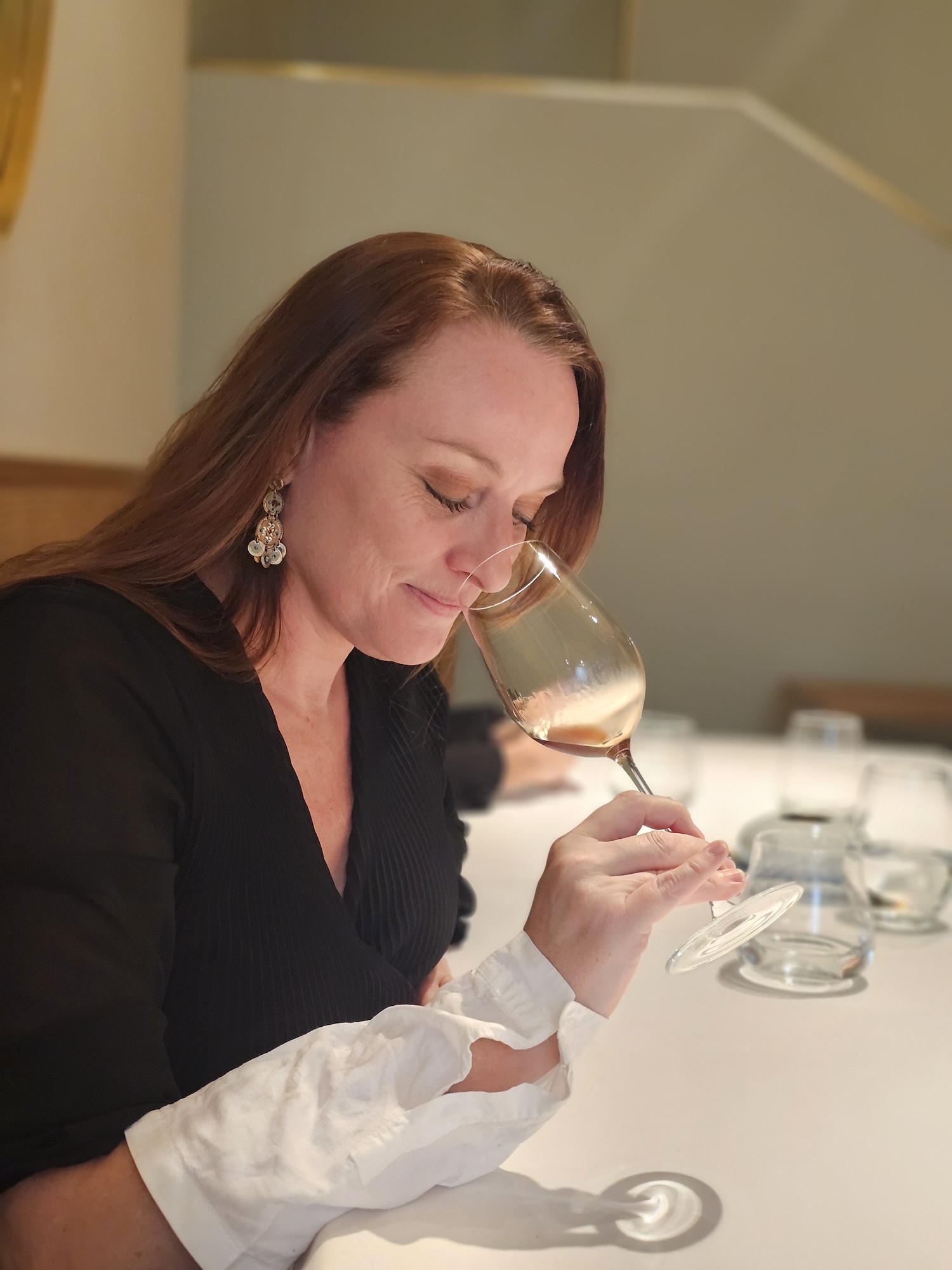
Julie Morgane is a Belgian food writer and photographer with a background in psychology. Alongside her freelance work in gastronomy, she supports young people with autism and has completed professional training in culinary arts, patisserie, and chocolate making.
Could you please tell our community a bit about yourself and what you do?
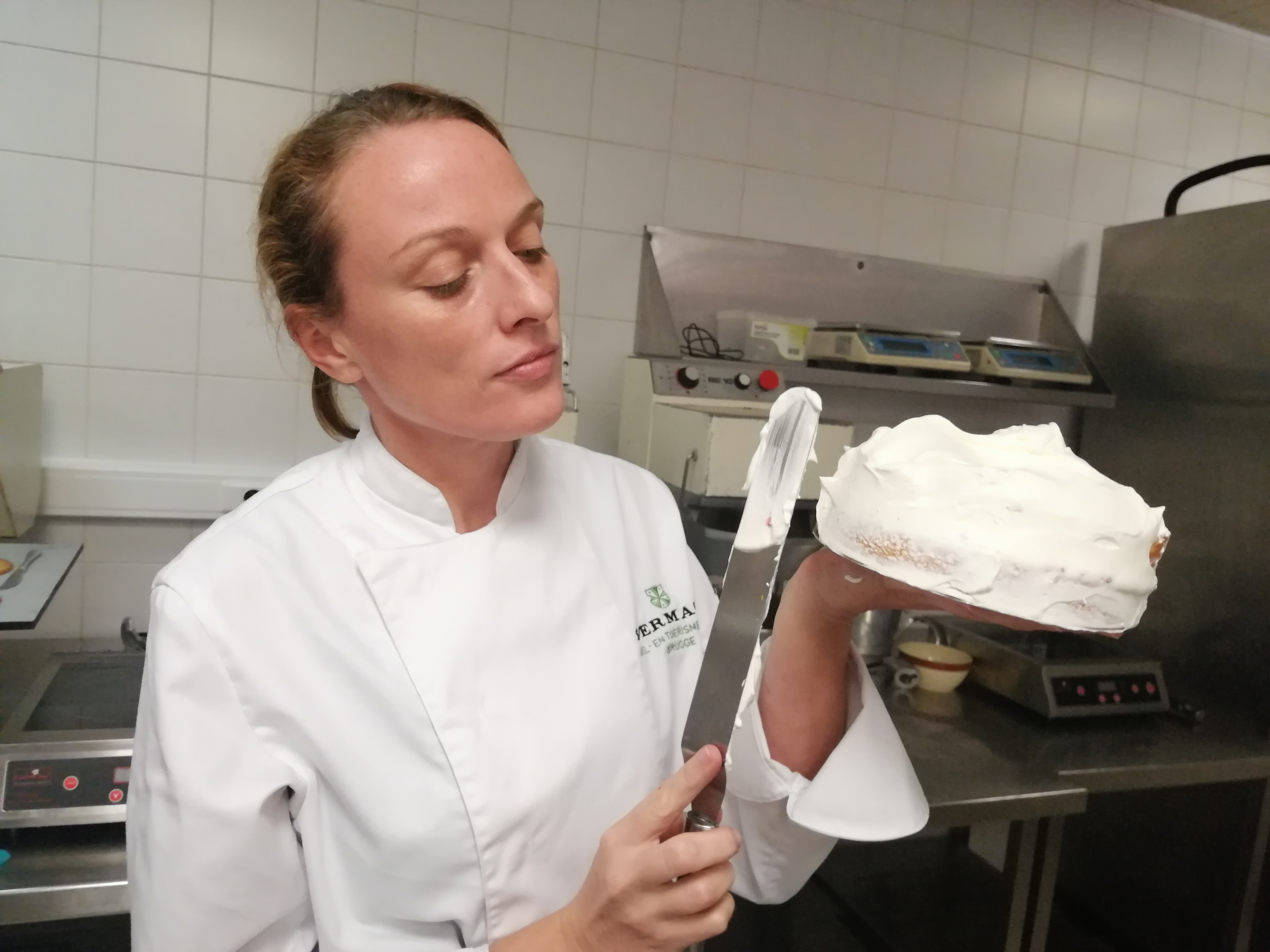
I am Julie Morgane, a psychologist by training and a foodie at heart. I combine a half-time job supporting young people with autism with my work as a freelance food writer and photographer. I travel across my small country and far beyond to taste, discover and tell stories about gastronomy. Food is both my greatest passion and my profession. In the past, I also completed a chef training at a renowned hotel school in Belgium, complemented by studies in patisserie and chocolate making.
What are you currently working on or excited about right now?
At the moment I am mainly travelling and tasting. Next week I am leaving for India for a food trip, which I am really looking forward to. New flavours, different food cultures and local traditions always bring fresh inspiration. Other projects are in the pipeline, and it promises to be an exciting year.
A book I contributed to will also be published soon, in collaboration with my home city of Ostend. It focuses on North Sea fish and brings together the vision and recipes of 22 restaurants. I was responsible for the photography, while the texts were written by Femke Vandevelde, Chair Benelux. The launch is planned for March.
How would you describe the restaurant scene in Ghent at the moment?
Ghent is a lively university city with a strong, distinctive character. Its progressive mindset is reflected in the way people approach gastronomy. Sustainability and product-driven cooking are not just a marketing label here, but a genuine guiding principle for many places.
The city has profiled itself for years as the veggie capital of Europe, and that clearly shows on restaurant menus. Even the Belgian fry shop culture has taken on a different shape here. While that tradition is usually not very vegetarian, many fry shops in Ghent offer solid veggie and vegan options, and often fry their potatoes in vegetable oil instead of animal fat.
The pace is high. New places open quickly, but not all of them last. In a small country like Belgium, culinary differences between cities are significant, and Ghent is without doubt one of the best provided for. The offering is broad and strong, from refined gastronomy to accessible addresses and more alternative options.
What are three restaurants in Ghent you particularly enjoy, and why?
I find it difficult to limit myself to Ghent alone, because Belgium is small but very rich in culinary terms. Still, Ghent is particularly well provided for.
When it comes to fine dining, Oak and Vrijmoed clearly stand out. These are restaurants with a strong signature and consistent quality. Oak, led by chef Marcelo Ballardin, offers a refined international cuisine with technical precision and strong flavour structure. The dishes look clean and composed, but never lack depth. Vrijmoed, by chef Michaël Vrijmoed, cooks from a classical foundation that he subtly weaves together with global influences. Vegetables often take the lead and receive the same attention as fish or meat. He also serves a fully vegetarian menu that never feels like a fallback option.
Close to where I live is Bask, where everything revolves around grill and asador-style cooking. You sit close to the action, often with a view of the fire, in a former petrol station. They work with strong products and clear flavours. Some guests are surprised by the bill, but anyone who looks at what is on the plate and at the sourcing understands why. Chef Sam D’Huyvetter draws inspiration from the Basque region and works only with top-quality products; he also makes his own charcuterie and raises his own guinea fowl.
I also consider A Food Affair a strong address. It is an informal place where chef Laurent Locquet shapes Southeast Asian flavours in his own way, mainly inspired by Thailand and Vietnam. Not copies of classic dishes, but personal interpretations with clear flavour and spice. One dish I always return for is the Holstein beef neck in panang curry. In 2023, A Food Affair was named Asian Restaurant of the Year.
Is there a newer restaurant in Ghent that you think is doing especially interesting things?
In Ghent, the restaurant landscape changes quickly. Many places open, but many also disappear. You see this across the country. Trends follow each other at high speed and after a while a certain uniformity sets in. Concepts get copied and menus drift toward the same safe zone.
What I am personally looking forward to lies outside Ghent, in my home city of Ostend on the North Sea, just sixty kilometers away. Chef Willem Hiele, known for his eponymous restaurant in Oudenburg, will open Het Mossenhuis there this spring. It will be an authentic place with wooden wall panels, oil lamps and even a rope-operated lift.
In the past, fishermen came here to warm up and eat mussels with fries, a typical Belgian classic. He deliberately wants to keep the kitchen simple: fresh fish bought on the quay thirty meters from the restaurant, prepared in a pure way, with an emphasis on connection and sharing at the table.
I recently had the chance to taste there and got a clear picture. The style is distinctly old school, heartwarming and firmly rooted in what the North Sea has to offer. Less is more, even if that apparent simplicity requires a great deal of craftsmanship. Places like this genuinely warm me. Pure folklore.
Are there any hidden gems in Ghent you would like to highlight – and what would you order there?
Ghent has many small places that instantly put me in a good mood. A true institution is Martino’s, which has now been around for seventy years. It originally served the martino sandwich: a crusty baguette with steak tartare, Tabasco, ketchup, Worcestershire sauce, onion, pickles and anchovy.
There is still debate about who exactly invented it, but its iconic status is beyond doubt. The place was once located in a rougher neighborhood that has since been fully upgraded. Today you go there for a solid hamburger with fried egg, onion, tomato sauce and fresh fries. They recently published a cookbook as well.
Zuru Zuru Ramen is another gem. Chef-owner Nick Hofman built the concept around authentic Japanese ramen after learning the craft in Japan. The broths simmer for hours and the noodles are made fresh. I always go for the spicy ramen, which you can order in four heat levels and expand with extra toppings to taste.
Which food cities around the world inspire you the most, and where do you like to eat when you’re there? What do you enjoy most about those places?
I deliberately want to highlight my own country here and not go for the most obvious choices. For me, Antwerp is the most culinary city in Belgium. For a city of its size, it scores remarkably high in the number of Michelin-starred restaurants. Corrected for population, Antwerp even ranks among the world’s top cities in stars per capita and consistently appears high in international comparisons.
But the story does not stop with stars. There is also a broad layer of strong, accessible restaurants. The food culture is clearly alive, with a real focus on quality and diversity. My personal favourite there is Bistrot du Nord, a Belgian-French bistro where you feel transported to the 1920s. The cooking is classic and recognizable, executed so well on a technical level that it becomes exceptional. Not surprisingly, it is very popular among chefs themselves.
I also find Amsterdam a great city to explore from a culinary point of view. It is not always immediately associated with a strong food scene, but it is clearly on the rise. At the top end it sometimes falls a bit short for me, but in the mid-range you find particularly strong places where price and quality are well balanced, such as Choux or Europa. The latter is located in a former garage in Amsterdam North and is led by a self-taught chef with a very distinct personal direction.
Bangkok is one of my favourite food cities. I like to explore food markets and street stalls there. Nothing beats eating something that just came off the fire at a plastic table. That immediacy, that speed, those flavours remain unmatched. At the same time, Bangkok has built a strong reputation in fine dining in recent years. The level is high and the diversity is wide. My personal favourite in that segment is Sühring – perhaps unexpected, as it is a German restaurant in the heart of Bangkok, but that very independent position makes it so interesting.
What is your favourite dish and where is your favourite restaurant to have it?
Choosing a single favourite dish is almost impossible, but if I really have to, it is the shrimp croquette. A typical Belgian dish that you really only find here. Belgians are truly obsessed with it, so much so that my hometown hosts a yearly festival to crown the best shrimp croquette. Tickets sell out every time within minutes.
Making a good shrimp croquette is less simple than it looks. The crust needs to be crisp and golden brown, without tasting greasy. The filling should stay creamy and be generously packed with shrimp. In my view, the best one is not found on the coast, but in Antwerp, at Bistrot du Nord.
Is there an up-and-coming chef you think is doing great things?
Here too, I deliberately choose to highlight my small home country, Belgium. We have many talented chefs, some with an international reputation, others more under the radar but just as strong. I will highlight three for different reasons.
Willem Hiele is known for a creative signature that remains fundamentally pure. He cooks close to his environment and pays clear tribute to the terroir of the North Sea. His style looks free, but always starts from product and flavour.
Karen Torosyan, based in Brussels at Bozar Restaurant, is a true craftsman. His technical mastery is exceptional, especially visible in his pâtés and pithiviers. My favourite is the one with pigeon, foie gras and eel – three products, three different cooking times, brought together perfectly in a single pastry preparation.
Glenn Verhasselt also deserves attention. He cooks in a restrained, classical style, with a strong focus on cuisson and sauces. No excess, no noise, just precision. The fact that he also works with his own vineyard reflects his product-driven approach.
Is there a food expert or curator whose restaurant recommendations you would particularly want to hear?
I have met Mattias Kroon a few times, and each time I have been impressed by his knowledge. When he explains or recommends something, I take it seriously right away. He has a strong substantive background and a clear view of things. What I appreciate is that he does not simply follow trends, but is also able to look at them critically.